
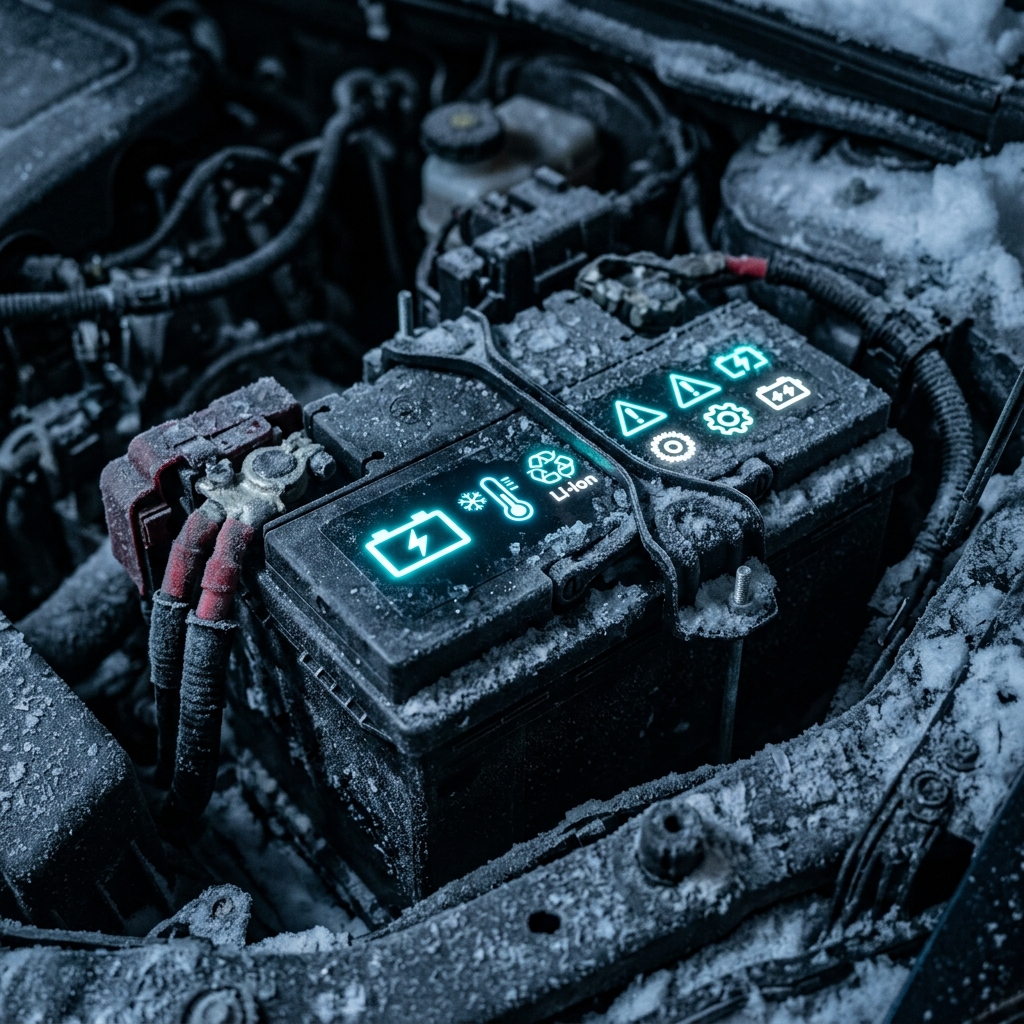
As temperatures drop, automotive battery failures surge. For distributors, winter is both a peak sales season and a critical period for customer support. This guide provides the technical knowledge you need to advise your clients and protect your inventory.
Understanding Cold-Weather Battery Behavior
Lithium-ion batteries experience reduced ionic conductivity at low temperatures. Key effects include:
- Capacity reduction: A fully charged Li-ion cell at -20°C delivers only 50–60% of its rated capacity
- Increased internal resistance: Higher voltage drop under load means reduced cranking power
- Slower charging: Charging below 0°C risks lithium plating, which permanently damages cells
Storage Best Practices
For distributors holding inventory through winter months:
- Maintain 40–60% state of charge for long-term storage. Fully charged or fully depleted cells degrade faster.
- Store at 15–25°C in a dry, ventilated warehouse. Avoid unheated containers.
- Rotate stock on a first-in, first-out (FIFO) basis. Li-ion cells lose 2–3% capacity per month even when idle.
- Inspect quarterly: Check for swelling, unusual odors, or voltage drops below 3.0V per cell.
Pre-Sale Testing Protocol
Before shipping units to end customers in winter:
- 01Visual inspection: Check housing integrity, cable condition, and clamp spring tension
- 02Voltage verification: Confirm resting voltage is within 90–100% SOC range
- 03Functional test: Perform one test crank on a load simulator to verify peak current delivery
- 04Accessory check: Ensure all cables, adapters, and documentation are included
Customer Advisory Points
Equip your sales team with these talking points:
- Pre-warm the unit: If stored in a cold vehicle, bring the jump starter indoors for 30 minutes before use
- Don't charge below 0°C: Wait until the unit reaches room temperature before connecting the charger
- Monthly top-up: Advise customers to recharge their jump starter every 30 days, even if unused
- Use the correct clamp sequence: Always connect red (+) first, then black (-), to avoid sparking
Product Recommendations for Cold Climates
When consulting with fleet operators or dealerships in cold regions, recommend models with:
- Wide temperature rating: -20°C to 60°C operating range minimum
- High peak current: 2000A+ for reliable cold cranking
- LiFePO4 chemistry: Superior low-temperature discharge characteristics vs. standard Li-ion
- Heated clamp technology: Some premium models include self-heating boost clamps
Warranty Considerations
Cold-weather damage is a common warranty dispute. Clarify these points in your distribution agreements:
- Charging below manufacturer's minimum temperature voids the cell warranty
- Physical damage from drops on icy surfaces is not covered under standard terms
- Capacity loss due to improper storage (extreme cold/heat) is considered user negligence
Summary
Winter battery maintenance is a value-added service that differentiates professional distributors from commodity resellers. By educating your customers and maintaining proper inventory practices, you protect both your reputation and your margins.
Need bulk pricing for winter stock? Contact our export department for seasonal promotional rates and expedited shipping options.