
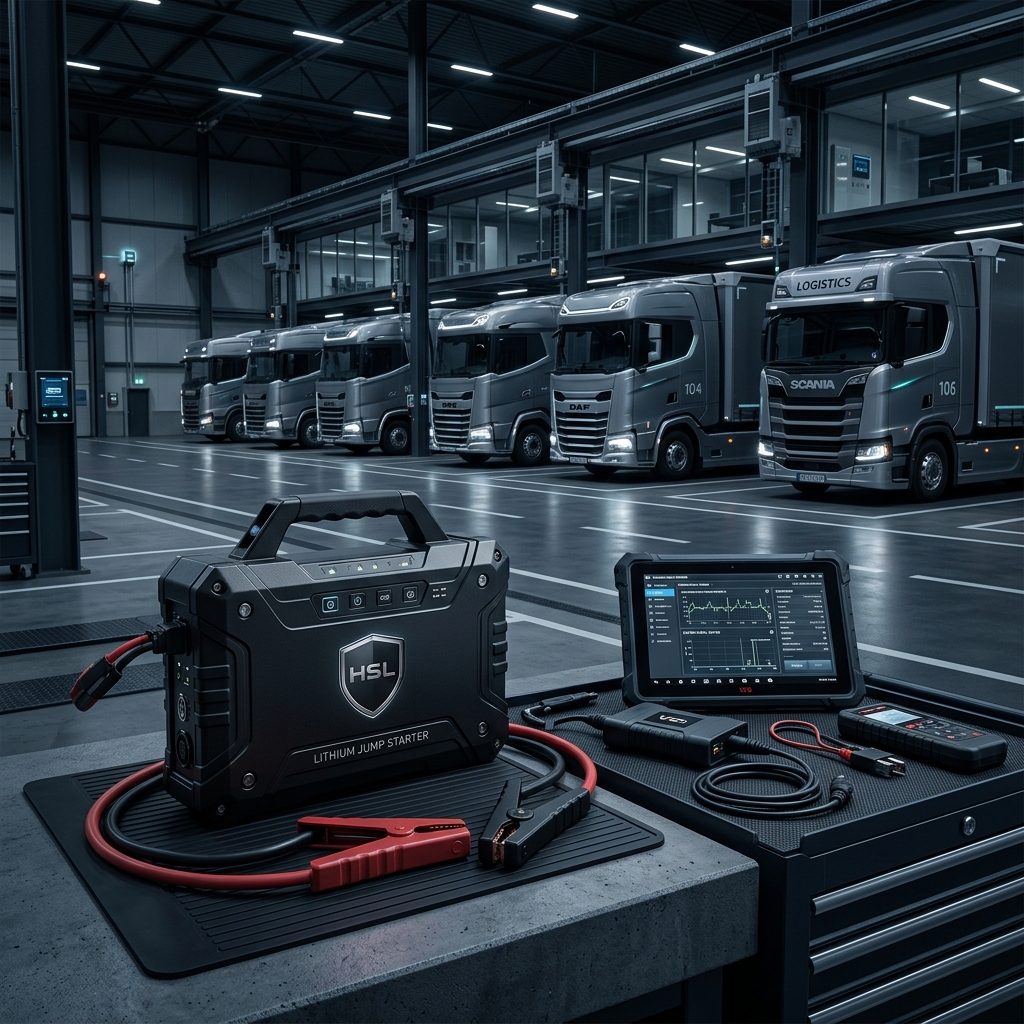
Managing a commercial fleet means dealing with dead batteries at the worst possible times. A reliable jump starter is not a luxury — it is a critical piece of operational infrastructure. This guide walks you through the key factors to evaluate when sourcing jump starters for fleet-scale deployment.
1. Peak Current Rating
The most important specification is peak cranking amperage. For standard passenger vehicles, 1000A–1500A is sufficient. However, fleet vehicles — including delivery vans, trucks, and heavy-duty equipment — often require 2000A or higher.
Always verify that the manufacturer's peak current claim is tested under realistic load conditions (e.g., SAE J537 standard), not just theoretical maximums.
2. Battery Chemistry & Capacity
Modern jump starters use lithium-ion (Li-ion) or lithium iron phosphate (LiFePO4) cells:
- Li-ion: Higher energy density, lighter weight, more affordable. Best for mixed fleets.
- LiFePO4: Superior cycle life (2000+ cycles), better thermal stability, wider operating temperature range. Ideal for extreme-climate operations.
3. Safety Certifications
B2B procurement requires verified safety credentials:
- CE / FCC for regulatory compliance in target markets
- UN38.3 for lithium battery transportation safety
- RoHS for hazardous substance restrictions
- MSDS documentation for customs clearance
4. Operating Temperature Range
Fleet operations span diverse climates. Look for units rated at -20°C to 60°C minimum. Cold-cranking performance degrades significantly below -10°C with standard Li-ion cells, so verify the manufacturer's low-temperature discharge curves.
5. Durability & IP Rating
Fleet jump starters endure rough handling. Key durability factors include:
- IP65 or higher water/dust ingress protection
- V0-grade flame-retardant housing materials
- Drop-tested enclosures (1.2m minimum)
- Rubberized overmold for grip and shock absorption
6. Total Cost of Ownership
Don't evaluate on unit price alone. Consider:
- Cycle life: How many charge/discharge cycles before capacity drops below 80%?
- Warranty terms: 18–24 months is standard for quality B2B products
- Spare parts availability: Can clamps, cables, and adapters be replaced individually?
- OEM customization: Does the supplier offer logo printing, custom packaging, and firmware branding?
Conclusion
Choosing the right jump starter for fleet management is a balance of performance, safety, durability, and economics. Partner with a manufacturer who can provide transparent test data, certified quality documentation, and flexible OEM/ODM services.
Ready to source? Contact our export team for a detailed quotation and sample arrangement.